
As a homeowner, you know how energy costs keep going up. The federal solar tax credit ended on Dec. 31. Now, many wonder if residential solar is still a smart choice.
The good news is that residential solar benefits go beyond the expired solar investment tax credit. With the right financing, homeowners can still save a lot. This is thanks to residential solar savings.
Getting solar energy means you use less from the grid. It also gives you a clean, green power source. This can cut down your energy bills a lot. It’s a great way to save money and help the planet.
Key Takeaways
- Residential solar energy offers significant financial savings beyond the expired ITC.
- Combining solar with the right financing options maximizes savings.
- Residential solar reduces reliance on the grid and provides a clean energy source.
- Investing in solar can lead to substantial reductions in energy bills.
- Homeowners can still benefit from solar energy despite the ITC expiration.
Understanding the Solar Investment Tax Credit (ITC)
For those interested in solar energy, knowing about the Solar Investment Tax Credit (ITC) is key. The ITC lets eligible projects cut their tax bill by a certain amount. This is based on the costs of the solar project.
What is the ITC and How Has It Changed?
The Solar Investment Tax Credit has seen changes over time. At first, it offered a bigger tax credit percentage. Now, it still helps a lot with solar energy adoption, but the percentage has changed.
Current ITC Rates and Future Outlook
The ITC rate is now 26% for solar projects started before 2023. It drops to 22% for projects in 2023. Homeowners need to know these rates to plan well. The credit might decrease in the future, so timing is important.
How to Claim the ITC on Your Taxes
To claim the ITC, you need to file Form 5695 with your taxes. You must also meet certain criteria and keep records of your solar project costs. Getting help from a tax expert can make the process easier and ensure you follow all rules.
Grasping the ITC details can greatly affect the cost of solar projects for homeowners. By keeping up with current rates, future changes, and how to claim it, homeowners can make better solar investment choices.
Is There a Financial Benefit in Going Residential Solar Post ITC?
With the ITC changing, homeowners wonder if solar is still worth it. The answer depends on understanding the ITC’s current state and the financial impact of solar energy.
The Short Answer: Yes, But It's Nuanced
Yes, solar energy still offers financial benefits post-ITC. But, the benefits vary based on several factors. EnergySage says homeowners can save $37,000 to $148,000 over 25 years. Savings depend on the cost of installation, local electricity rates, and available incentives.
“The financial benefits of solar energy are substantial, but they require a nuanced understanding of both the costs and the savings involved.”
EnergySage
Key Financial Benefits Beyond the ITC
There are many financial benefits beyond the ITC:
- Reduced electricity bills: Solar panels can lower your bills.
- Net metering: You can sell extra energy back to the grid.
- Increased home value: Solar installations can raise your home’s value.
| Financial Benefit | Description | Potential Savings |
|---|---|---|
| Reduced Electricity Bills | Lower your utility bills with solar energy | $500-$1,000 annually |
| Net Metering | Sell excess energy back to the grid | $100-$300 annually |
| Increased Home Value | Boost your home’s resale value | $15,000-$30,000 |
When Solar Might Not Make Financial Sense
Solar energy has many benefits, but it’s not always financially wise. This is true for:
- Shaded or obstructed rooftops
- High upfront costs without financing options
- Low local electricity rates
In conclusion, the financial benefits of residential solar post-ITC are nuanced. Yet, many homeowners can see significant savings. It’s crucial to assess your situation, weighing costs against potential savings.
Breaking Down the Costs of Residential Solar Systems
Residential solar costs include several key parts. Each part is important for the total cost. Homeowners need to know these costs when thinking about solar energy.
Average Installation Costs in 2023-2024
The cost to install a solar system in 2023-2024 is between $15,000 and $30,000 before any savings. The Department of Energy says the cost per watt can be between $2.50 and $3.50. This depends on the system’s size and the quality of the equipment.
Equipment vs. Labor: Where Your Money Goes
About 60-70% of the cost goes to the equipment, like solar panels and inverters. The rest, 30-40%, is for labor, permits, and inspections. High-quality equipment might cost more upfront. But it can mean better efficiency and a longer system life.
Financing Options and Their Impact on Overall Costs
Financing choices can change how much a solar system costs. Homeowners have many options, each with its own benefits and drawbacks.
Cash Purchase vs. Solar Loans
Buying with cash means no debt or interest. This can save a lot of money. But, solar loans are an option for those who can’t pay all at once. These loans often have good interest rates and flexible payback plans.
Solar Leases and PPAs: Financial Implications
Solar leases and PPAs let you use solar energy without paying upfront. They can lower the initial cost. But, they might not offer the same long-term savings as owning the system. It’s key to look closely at the terms of these agreements.
Knowing about the different parts of solar costs and the financing choices helps homeowners make smart decisions. The Department of Energy says solar savings depend on many factors. These include energy use, financing, and incentives. This shows why it’s important to look at all aspects of solar costs.
- Average installation costs range from $15,000 to $30,000.
- Equipment costs account for 60-70% of total costs.
- Financing options include cash purchase, solar loans, leases, and PPAs.
Calculating Your Potential Savings from Solar
To figure out if solar is right for your home, you need to calculate your savings. This involves looking at several important factors that affect your savings.
Electricity Bill Reduction: The Primary Benefit
The biggest perk of solar is saving on your electricity bills. By making your own power, you use less from the grid. This means lower bills every month. Using solar with energy-saving appliances can cut costs even more. For example, LED bulbs and smart thermostats help use less energy.
To guess how much you’ll save, think about your current energy use, your solar system’s size, and your area’s sunlight. Energy audits can help show how much energy you use.
Net Metering and Selling Power Back to the Grid
Net metering is another big plus of solar. It lets you sell extra energy to the grid, lowering your bills even more. Your utility company gives you credits for the energy your panels make. This can really cut down your energy costs, mainly when you use less energy.
To use net metering, you need a special meter. Not all companies offer it, so check with yours to see if they do and what rules apply.
Tools and Resources for Estimating Your Savings
There are many tools and resources to help estimate your solar savings. Online solar calculators can give a basic idea based on your location, energy use, and system size. Also, talking to a solar installer can give you a more precise estimate for your situation.
With these tools, you can decide if solar is worth it for you. Knowing your potential savings helps you see if solar fits your budget and goals.
Beyond the ITC: Additional Solar Incentives
Homeowners can find many solar incentives beyond the federal ITC. These incentives can lower the cost of solar panels. It’s important to check what’s available in your area.
State-Specific Tax Credits and Rebates
States offer tax credits and rebates for solar installations. Some states give a state tax credit on top of the federal ITC. Homeowners should check with their state energy office to see what incentives are available. Some states also have rebate programs for solar panels.
| State | Incentive Type | Amount |
|---|---|---|
| California | Rebate | $1,000 |
| New York | Tax Credit | 25% of system cost |
| Texas | Rebate | $500 |
Local Utility Incentives and SRECs
Local utility companies offer their own incentives for solar panels. These include rebates, special rates, and Solar Renewable Energy Certificates (SRECs). SRECs are valuable as they can be sold, providing extra income. Homeowners should contact their utility provider to learn more.
Property Tax Exemptions and Increased Home Value
Many states exempt solar installations from property taxes. This means the value of solar panels won’t raise your taxes. Solar installations also boost a home’s value. According to the National Renewable Energy Laboratory, homes with solar panels can see a $15,000 increase in value. This adds financial value and makes the home more appealing to buyers.
Understanding Solar Payback Period
When you think about getting solar for your home, knowing the solar payback period is key. It shows how long it takes for your solar system to pay off through savings. This is a big deal for homeowners.
Many things affect your solar payback period. These include the system’s cost, how you finance it, local electricity rates, and any incentives you might get. Knowing these helps you make smart choices about solar.
What Factors Affect Your Payback Timeline?
Several important factors can change your solar payback period. These are:
- The initial cost of the solar energy system
- Financing options and their interest rates
- Local electricity rates and how they might change
- Any incentives, like tax credits and rebates
- How much sunlight your area gets
For example, someone in Arizona might see their system pay off faster than someone in Seattle. This is because Arizona gets more sunlight, leading to more energy production.
Average Payback Periods Across Different U.S. Regions
The time it takes for solar systems to pay off varies by region in the U.S. Here’s a table showing average payback periods for different areas:
| Region | Average Payback Period (Years) |
|---|---|
| Northeast | 8-12 |
| Southwest | 5-8 |
| West Coast | 6-10 |
| Southeast | 7-11 |
Strategies to Shorten Your Payback Period
To make your solar system pay off faster, try these tips:
- Make sure your system is the right size for your energy needs.
- Look for financing options with low interest rates.
- Use all incentives you can, like tax credits and rebates.
- Keep an eye on how well your system is working to make sure it’s efficient.
By understanding what affects your solar payback period and using these tips, you can get the most out of your solar system.
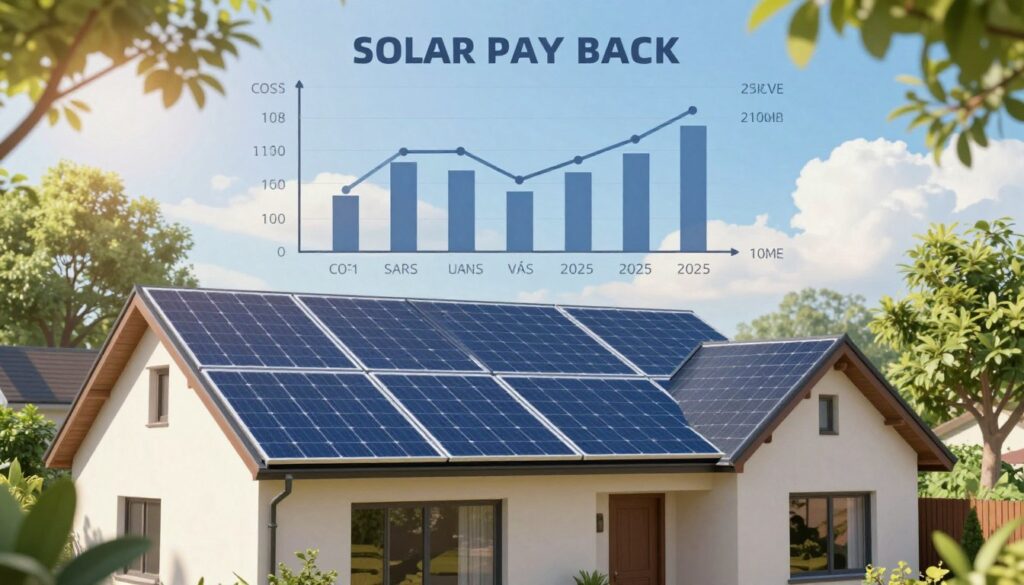
Long-Term Financial ROI of Residential Solar
Residential solar energy is a smart choice for homeowners. It offers a great long-term financial return. This makes it a solid investment.
20-25 Year Financial Projections
Looking at the long-term, residential solar is very appealing. EnergySage says homeowners can save $37,000 to $148,000 over 25 years. These savings come from lower electricity bills and selling extra power.
Solar as a Hedge Against Rising Utility Rates
Solar energy is great for protecting against rising utility costs. By making your own electricity, you avoid rate increases. This can save you a lot of money over time.
Maintenance Costs and System Longevity
Solar panels are built to last, often over 25 years. They need little maintenance, just occasional cleaning. This helps keep your solar system running well and boosts its value.
Impact on Home Resale Value
Adding solar panels can also raise your home’s value. Homes with solar sell for more than those without. This is a big plus for homeowners.
In summary, residential solar energy offers many benefits. It saves money, protects against rate hikes, has low maintenance, and increases home value. It’s a wise investment for the long term.
Common Misconceptions About Solar Economics
Many people think solar energy is too expensive. But, the solar industry keeps getting better. It’s important to clear up these myths to show solar’s real value.
"Solar Only Works in Sunny States"
Some think solar works only in sunny places like California. But, solar panels work on cloudy days too. Germany, known for its cloudy weather, leads in solar energy.

"Solar Is Too Expensive Without the Full ITC"
Many believe solar is too pricey without the full Investment Tax Credit (ITC). But, solar costs have dropped a lot. Plus, local and state incentives can help lower the cost.
| Year | Average Cost per Watt | Average System Cost |
|---|---|---|
| 2010 | $4.23 | $21,150 |
| 2020 | $2.75 | $13,750 |
| 2023 | $2.50 | $12,500 |
"Solar Panels Never Pay for Themselves"
Studies show solar panels can pay off through savings and incentives. The time it takes to break even depends on location and system size. On average, it’s 7-10 years.
“The average return on investment for solar panels is between 10-20%, making it a compelling financial decision for many homeowners.”
NREL
In conclusion, solar energy is more than just a myth. It offers real financial benefits. Knowing the truth can help homeowners decide to go solar.
Conclusion: Making the Solar Decision Based on Financial Merit
The choice to invest in home solar energy is complex. It involves many financial factors. Homeowners can make a smart choice by understanding the Solar Investment Tax Credit (ITC) and other incentives.
Going solar offers big financial benefits. It can lower your electricity bills and let you sell extra power back to the grid. When you look at solar investment, think about the costs, financing, and long-term savings.
Studies show that using incentives and financing can lower the cost of solar panels. This makes solar energy a smart financial choice. It offers a good return on investment over time.
Deciding on solar energy should be based on a detailed look at your situation. Consider your energy needs, budget, and local incentives. With the right info and planning, solar energy can be a wise financial choice. It brings both short-term and long-term benefits.